You have the prints. You have the frames. How you arrange them on a wall matters as much as what you hang — the same three prints can look scattered or composed depending on the method. Seven approaches, from dense salon-style to a single statement piece.
1. Salon-Style Hanging

A dense, eclectic mix of sizes and frames — no strict rules on alignment or spacing. Best for: 5-8 prints, large living or dining room walls. Key rule: keep a loose centre line at 145cm from the floor so the mass reads anchored, not floating.
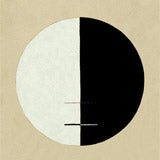
 Buddha's Standpoint by Hilma af Klint
  Japanese Azaleas by Ogawa Kazumasa
  Cat in New York by Caroline Bonne Müller
  Fresh Blue by Angelo Cerantola
 2. Grid Hanging

A strict, evenly-spaced grid of identical frames — architectural and precise, reading as one installation. Best for: one artist's series, above a sideboard or desk. Key rule: spacing identical everywhere, typically 5cm — use a spirit level.
 Nenokuchi Lake by Hasui
  Morning Sea at Shiribeshi by Hasui
  Morning of Cape Inubo by Hasui
  Ioridani Pass, Etchu by Hasui
 3. Row Hanging

A single horizontal line, aligned at centre height — clean and easy to read left to right. Best for: hallways and corridors, 3-5 prints. Key rule: align the horizontal centre of each print, not the top or bottom edge.
 Monograph Blue Flowers by amini54
  Loving Couple by Treechild
  Stark White Tree Trunk by Little Dean
 4. Edge Hanging

Like row hanging, but aligned at one edge instead of the centre — more dynamic, good for mixed heights. Best for: bold graphic prints, 3-6 pieces. Key rule: pick top or bottom edge and commit — top is the default.
 Geometrics 2 by Jazzberry Blue
  Flow 1 by Jazzberry Blue
  Flow 2 by Jazzberry Blue
 5. Symmetrical Hanging

Prints mirrored across an axis, flanking a mirror, window, or headboard. Formal, calm, immediately intentional. Best for: above beds, fireplaces, console tables. Key rule: symmetry is all or nothing — if the sides don't mirror exactly, it reads as a mistake.
 Bold Geometric Shapes and Vibrant Colors by Little Dean
  Bold Geometric Shapes by Little Dean
 6. Staircase Hanging

Prints step up the diagonal of a staircase, following the handrail. Dramatic, and one of the trickiest to get right. Best for: stairwells with at least 2m of wall height, 4-8 prints. Key rule: follow the handrail's angle, not the steps.
 Shinrin no miya by Hiroshi Yoshida
  Hyakucho gafu, Pl.19 by Kono Bairei
  Hyakucho gafu, Pl.27 by Kono Bairei
  Yanagi ni shakkyo by Hiroshi Yoshida
 7. Single Statement Piece

Sometimes one print is enough. A large-format piece hung alone creates focus and calm — nothing competing for attention. Best for: above sofas or beds, minimalist rooms. Key rule: fill two-thirds of the wall width, or centre it above the furniture below.
 Road to Nikko by Hasui
 Which Method Should You Choose?
Small Wall / Few Prints
Row hanging or symmetrical hanging. Clean and proportionate.
Large Wall / Many Prints
Salon-style or grid. Both fill large spaces confidently.
Modern / Minimalist
Grid or single statement. Let the architecture breathe.
Eclectic / Personal
Salon-style or staircase. Embrace the mix.
All our prints are produced in our Berlin studio with archival pigment inks on museum-grade materials — colour and quality stay consistent across every order, whichever method you choose.