Goyo Hashiguchi produced only a small number of shin-hanga woodblock prints, yet each one is considered a masterwork. His bijin-ga portraits — women combing hair, applying powder, resting after a bath — have a psychological intimacy and modern restraint that sets them apart from earlier ukiyo-e. Quietly powerful Japanese printmaking.
Goyo Hashiguchi produced only a handful of woodblock prints before his death at forty, but each one carries a quiet intensity that has outlasted far larger bodies of work. His bijin-ga portraits — Woman Combing Her Hair, Woman After a Bath, Woman Applying Powder — show women in private, unguarded moments with a psychological depth that feels remarkably modern. Unlike the flat decorative surfaces of earlier ukiyo-e, Hashiguchi's figures have weight, presence, and individuality. His nature studies, like Ducks, show the same careful attention to line and tone.
Every Hashiguchi fine art print is produced in our Berlin studio using archival pigment inks rated for over 100 years. Paper prints are made on 225g matte fine art paper, available in sizes A3, 50×70cm, 70×100cm, and A0. The matte surface and crisp detail reproduction do justice to the fine lines and subtle gradations of the original woodblock technique. Frame options include oak, black, and walnut brown.
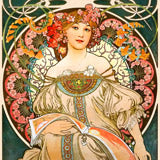
For more Japanese woodblock prints, browse our Japanese art collection or see work by Ohara Koson, whose nature prints share the shin-hanga movement's blend of traditional craft and modern composition. Fans of elegant figurative work may also enjoy Alphonse Mucha, whose Art Nouveau portraits share a similar sense of line and grace.
Framing and Display
Hashiguchi's prints are refined and detailed — they benefit from framing that does not compete. Black frames bring out the clean lines and add a contemporary edge that works in modern interiors. Oak frames warm the image and suit spaces with natural materials. Walnut brown frames complement the muted, earthy tones in many of the bijin-ga portraits.
The vertical format of most Hashiguchi prints — particularly the full-length portraits like Woman in Summer Dress and Waitress with a Red Tray — works well in narrow wall spaces, entryways, or alongside other vertical prints. For a curated Japanese art wall, pair a Hashiguchi portrait with a Koson nature print and a landscape by Hasui Kawase, keeping frames consistent. The restrained palette across shin-hanga artists makes them natural companions.


 Woman after a bath by Gōyo HashiguchiFrom CHF 23.00 /
 Ducks by Gōyo HashiguchiFrom CHF 23.00 /
 Woman applying powder by Gōyo HashiguchiFrom CHF 23.00 /
 Woman in Summer Dress by Gōyo HashiguchiFrom CHF 23.00 /
 Woman Combing Her Hair by Gōyo HashiguchiFrom CHF 23.00 /
 Waitress with a Red Traya Maid by Gōyo HashiguchiFrom CHF 23.00 /
 Woman after bath 1920 by Gōyo HashiguchiFrom CHF 23.00 /
 Woman Applying Rouge by Gōyo HashiguchiFrom CHF 23.00 /
 Hot Spring Inn by Gōyo HashiguchiFrom CHF 23.00 /