The Last Master of Ukiyo-e
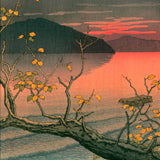
Kobayashi Kiyochika occupies a unique position in Japanese art history. He was the last major artist to work primarily in the woodblock medium, and the first to incorporate Western perspective, chiaroscuro, and atmospheric light effects into that tradition. His kosen-ga (light-ray pictures) capture Tokyo at night — fireworks reflected in water, lantern-lit streets, moonlight filtering through clouds — with a sensitivity to light that has no precedent in earlier Japanese prints.
His “Fireworks at Ikenohata” is a masterclass in nocturnal atmosphere: explosions of colour against a dark sky, their reflections stretching across still water. The image combines the flat decorative quality of ukiyo-e with a depth of field and luminous realism that owes more to Whistler or Turner than to Hiroshige. It is Japanese printmaking at its most experimental and visually ambitious. Kiyochika studied briefly under the English painter Charles Wirgman, and that exposure to Western painting technique is evident in every composition — yet he never abandoned the woodblock medium or the decorative sensibility that defines Japanese printmaking.
Print Format for Atmospheric Work
Kiyochika’s subtle light gradations and atmospheric effects reproduce best on fine art paper, where the matte surface captures every tonal shift without glare or reflection. The nocturnal scenes in particular benefit from the deep, clean blacks that paper printing achieves — the night sky reads as genuinely dark, giving the light sources their full dramatic effect. Paper prints are available in A3, 50×70 cm, 70×100 cm, and A0. For framing, black heightens the contrast and drama of his nocturnal scenes, creating a seamless transition from dark image to dark frame. Oak warms the overall tone, which works well for his more golden, twilight-hour compositions. Walnut brown is a third option for interiors with warm wood tones.
On canvas, the cotton surface adds a softness that enhances the atmospheric, almost Impressionist quality of Kiyochika’s work. The slight texture of the weave diffuses the light effects gently, creating a luminous quality that suits the misty, reflective surfaces in his compositions. Canvas prints come in 30×40 cm, 50×70 cm, and 70×100 cm, with an optional floating frame.
Related Japanese Masters
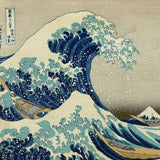
For more Japanese woodblock art, explore Hiroshige for landscape views of the Tokaido, Hokusai for iconic compositions like The Great Wave, or Kamisaka Sekka for decorative Rinpa-tradition prints. For Meiji-era photography, see Kusakabe Kimbei. All prints are produced in our Berlin studio using archival pigment inks rated for 100+ years.


 Fireworks at Ikenohata by Kobayashi KyochikaFrom CHF 23.00 /