Vollständiger Leitfaden · 9 Min. Lesezeit · Kuriosis Studio Team, Berlin · Juli 2026
Nur wenige Kunsttraditionen sind so unmittelbar wiederzuerkennen, oder so leicht im Alltag zu leben, wie der japanische Holzschnitt. Eine einzelne Welle, ein Berg, ein Vogel auf einem Ast: Die Bildsprache ist ruhig, grafisch und jahrhundertealt. Doch „japanische Wandkunst“ deckt ein weites Feld ab, von Meistern der Edo-Zeit über Landschaften des zwanzigsten Jahrhunderts bis zu Vogel-und-Blumen-Studien. Dieser Leitfaden bildet das gesamte Feld ab: die beiden großen Traditionen, die Künstler, die man kennen sollte, die wiederkehrenden Motive und wie du einen japanischen Druck für dein Zuhause auswählst und aufhängst. Wo ein Thema mehr Tiefe verdient, verlinken wir zu einem vollständigen Leitfaden.
Zwei große Traditionen: Ukiyo-e und Shin-hanga
Fast alles, was als „japanischer Kunstdruck“ verkauft wird, gehört zu einer von zwei Bewegungen, und wer den Unterschied kennt, findet sich in diesem Feld deutlich leichter zurecht.
Ukiyo-e, „Bilder der fließenden Welt“, ist die klassische Tradition der Edo-Zeit (etwa 17. bis 19. Jahrhundert). Das sind die Bilder, die den meisten Menschen zuerst einfallen: Hokusais Welle, Hiroshiges Regen. Wie das Metropolitan Museum of Art erklärt, war jeder Druck eine Zusammenarbeit von vier Seiten zwischen Verleger, Entwerfer, Blockschnitzer und Drucker, mit einem eigenen Block für jede Farbe und kleinen Kento-Marken, um die Schichten aufeinander abzustimmen. Wenn du die vollständige Technik verstehen willst, führt dich unser Leitfaden zu japanischen Holzschnitten ausführlich durch den Prozess.
Shin-hanga, „neue Drucke“, ist die Wiederbelebung dieses Handwerks im frühen zwanzigsten Jahrhundert. Angeführt vom Verleger Watanabe Shōzaburō und, wie es das Smithsonian National Museum of Asian Art formuliert, dem aufkommenden Zeitalter der Fotografie entgegengesetzt, hielt Shin-hanga den traditionellen Holzschnitt lebendig und nahm zugleich westliche Vorstellungen von Licht und Perspektive auf. Kawase Hasui und Hiroshi Yoshida sind seine beiden meistgesammelten Namen.
Die Meister, die man kennen sollte
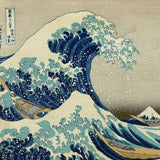
Katsushika Hokusai ist für die meisten der Einstiegspunkt. Seine Great Wave off Kanagawa, um 1831 als Teil der Serie Sechsunddreißig Ansichten des Berges Fuji entstanden, ist wahrscheinlich das meistreproduzierte Bild der Kunstgeschichte, eine turmhohe Welle mit dem winzigen, ruhig in ihrer Mitte gehaltenen Fuji. Unser Hokusai-Sammlerleitfaden behandelt sein Leben und die Serie im Detail.
Utagawa Hiroshige ist der Dichter der Straße und des Wetters. Seine großen Serien, Die Dreiundfünfzig Stationen des Tōkaidō (1833–34) und Hundert berühmte Ansichten von Edo (1856–58), machten die Landschaft zum Hauptthema des Ukiyo-e. Das British Museum hebt besonders seine feinen Himmelsverläufe hervor; das Brooklyn Museum besitzt die vollständige, 118 Blätter umfassende Edo-Serie, nach Jahreszeiten geordnet.
Auf der Shin-hanga-Seite ist Kawase Hasui der Meister ruhiger, stimmungsvoller Szenen, Schnee, Dämmerung, Regen an einem Schrein, behandelt in unserem Hasui-Leitfaden. Und Hiroshi Yoshida, ein westlich ausgebildeter Ölmaler, bevor er je einen Block schnitt, brachte echte atmosphärische Perspektive in das Medium, seine Geschichte findest du in unserem Hiroshi-Yoshida-Porträt.
 Jumantsubo Plain — Hiroshige
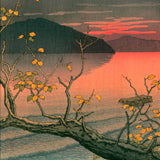
 Kiso River — Yoshida
Die Motive: Wellen, Berge, Vögel und Blumen
Japanische Drucke kehren immer wieder zu einer Handvoll Motive zurück, und die Wahl nach Motiv fällt oft leichter als die Wahl nach Künstler. Wellen und der Berg Fuji sind die Ikonen, kräftig, blau und unverkennbar. Landschaften und die Jahreszeiten stehen im Zentrum sowohl bei Hiroshige als auch bei den Shin-hanga-Meistern: eine Straße im Regen, Kirschblüten über einem Fluss, ein Dorf im Schnee.
Dann gibt es Kachō-e, „Vogel-und-Blumen-Bilder“, einen ruhigeren, dekorativeren Strang der Tradition. Ein fliegender Kranich, das aufgefächerte Rad eines Pfaus, ein Blütenzweig vor schlichtem Grund: Diese Motive wirken hervorragend dort, wo eine dramatische Welle zu viel wäre, und bringen Farbe und Natur herein, ohne eine unruhige Komposition. Ohara Koson ist der moderne Meister dieser Form, wie in seinem eindrucksvollen Green Peacock.
 Cherry Blossoms — Hasui
 Green Peacock — Koson
 Japanese Cranes — Taguchi
Warum japanische Kunst an einer westlichen Wand wirkt
Ein Grund, warum sich diese Drucke so mühelos in ein europäisches Zuhause einfügen, ist, dass die europäische Kunst seit über einem Jahrhundert mit ihnen im Dialog steht. Als japanische Drucke Ende des 19. Jahrhunderts Paris erreichten, veränderten sie die westliche Malerei. Vincent van Gogh kopierte Hiroshige 1887 direkt in Öl, das Van Gogh Museum besitzt seine Brücke im Regen (nach Hiroshige), und die flächige Farbe sowie die kühnen Bildausschnitte des Ukiyo-e flossen direkt in das Werk von Monet, Degas und Whistler ein. Die Bewegung bekam sogar einen eigenen Namen: Japonismus. Ein Holzschnitt an einer modernen Wand ist also keine fremde Kuriosität, er ist eine der Wurzeln der modernen Kunst selbst.
Ruhe als Gestaltungsprinzip
Flächige Farbe, offener Raum und ein einzelnes Motiv machen diese Drucke leicht lebbar auch in einem lebhaften Raum.
Eine gemeinsame Palette
Tiefe Blautöne, sanfte Grüntöne und warmes Cremeweiß kehren in der gesamten Tradition wieder, sodass mehrere Drucke gemeinsam als Set wirken.
Echte Kunstgeschichte
Diese Werke prägten Van Gogh, Monet und Whistler, eine Tiefe, die die meisten Dekodrucke schlicht nicht besitzen.
Ein Motiv für jeden Raum
Eine kräftige Welle für eine Statement-Wand, eine ruhige Vogelstudie für eine stille Ecke, die Bandbreite ist groß.
„Ukiyo-e-Drucke waren das Ergebnis einer Zusammenarbeit zwischen Verleger, Entwerfer, Blockschnitzer und Drucker.“
— The Metropolitan Museum of Art
Japanische Kunstdrucke bei Kuriosis entdecken →
Japanische Kunst für dein Zuhause auswählen und gestalten
Beginne mit der Stimmung der Wand. Ein dramatisches Motiv wie die Große Welle oder eine Hiroshige-Landschaft braucht etwas Raum zum Atmen, eine Statement-Position über einem Sofa oder Bett, wo es das ist, was ins Auge fällt. Ein ruhigeres Kachō-e-Stück, wie ein Kranich oder ein Blütenzweig, passt gut auf eine schmalere Wand, in eine Leseecke oder an eine Stelle, wo du Farbe ohne Unruhe möchtest.
Japanische Drucke lassen sich auch hervorragend gruppieren, weil die Tradition eine gemeinsame Palette teilt. Zwei oder drei zusammen, eine Welle, eine Landschaft, eine Vogelstudie, wirken wie ein durchdachtes Ensemble statt wie ein Bruch, solange du die Rahmen einheitlich hältst. Eiche passt zu den warmen Cremetönen und sanften Farben der Shin-hanga-Landschaften; Schwarz schärft die grafischen Ukiyo-e-Blautöne vor einer hellen Wand. Für die praktische Seite, wie hoch du hängst, wie du ein Werk über Möbeln bemisst, behandelt unser Leitfaden zur Wahl von Wohnzimmerkunst die Zahlen.
Eine letzte Anmerkung, weil diese Drucke es lohnen: Häng sie nicht an eine Wand mit direkter Sonneneinstrahlung. Die Farben machen den gesamten Reiz aus, und starkes Licht lässt sie mit der Zeit verblassen. Eine schattige Wand und ein guter Rahmen sorgen dafür, dass ein japanischer Druck jahrzehntelang so aussieht, wie er soll.
Warum Feinkunstdrucke? Der Kuriosis-Ansatz
Wir fertigen jeden Druck in unserem eigenen Berliner Studio mit Archivpigmenttinten, damit die tiefen Blautöne und sanften Verläufe, die japanische Holzschnittkunst ausmachen, an der Wand erhalten bleiben. Entdecke die vollständige Kollektion und finde deine Welle, deinen Berg oder deinen Kranich.
Quellen & weiterführende Informationen
- The Metropolitan Museum of Art, Woodblock Prints in the Ukiyo-e Style
- The British Museum, Hiroshige: Artist of the Open Road
- Brooklyn Museum, One Hundred Famous Views of Edo
- Smithsonian National Museum of Asian Art, Japan Modern: Prints in the Age of Photography
- Van Gogh Museum, Bridge in the Rain (after Hiroshige)