Vintage travel posters and travel-inspired art — Belle Epoque railway advertising, ocean liner graphics, Art Deco destination prints, Japanese travel woodblock. The golden age of travel poster design, when every destination was sold with the confidence of hand-drawn lithography.
Travel poster art reached its peak between 1900 and 1940 — the era when rail, ocean liner, and early aviation made long-distance travel newly possible, and advertising needed to make it irresistible. The artists who defined the genre understood something about aspiration and image that modern advertising still borrows from.
Jules Chéret pioneered the colour lithography that made travel posters possible. Roger Broders created the definitive French railway posters — romanticised views of the Côte d'Azur, the Alps, and provincial France that still define how we imagine those places. Cassandre applied Art Deco geometry to ocean liner advertising, creating some of the most recognisable poster designs of the twentieth century. This collection spans all of these movements and more, from Belle Époque romanticism through Art Deco precision to mid-century modernism.
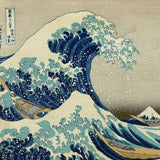
Beyond European travel advertising, the collection includes Japanese travel woodblock prints — Hasui Kawase and Hiroshige captured specific places with specific light. These read as travel art without any advertising intent, and they pair naturally with the European poster tradition.
Choosing the Right Format for Travel Posters
Travel posters were made for print — flat colour fields, confident typography, bold composition. These qualities read most accurately on fine art paper, where the graphic precision of the original lithographic process is preserved. Paper prints are available in A3, 50×70cm, 70×100cm, and A0, with oak, black, or walnut brown frames.
On canvas, the surface texture adds warmth that suits the more painterly Belle Époque pieces — the romanticised destination views with soft skies and warm tones gain depth from the canvas surface. Canvas prints come in 30×40cm, 50×70cm, and 70×100cm, with an optional floating frame.
For framing: natural oak complements the warm tones of Belle Époque travel advertising. Black frames sharpen the geometry of Art Deco posters and modernist railway graphics.
Pairing and Displaying Travel Posters
Travel posters work well in groups of two or three with consistent framing — the graphic confidence of the originals means they hold their own at any scale. A pair of Côte d'Azur posters from the same era creates an immediate visual statement. Mixing periods also works: a Belle Époque railway poster alongside an Art Deco ocean liner design shows the evolution of travel advertising without clashing.
For related collections, explore our vintage poster collection for the broader design tradition that travel posters belong to. Alphonse Mucha shares the Art Nouveau aesthetic of the earliest travel advertisements. The landscape collection offers a complementary approach to place and geography through fine art rather than commercial design.
All prints are produced in our Berlin studio using archival pigment inks rated for 100+ years.


 Everglades National Park by Patryk KrygowskiFrom €25,99 EUR /
 Vintage Glacier Park Woman by Patryk KrygowskiFrom €25,99 EUR /
 American Samoa Tropical Beauty by Patryk KrygowskiFrom €25,99 EUR /
 Vintage Arches Vacation by Patryk KrygowskiFrom €25,99 EUR /
 Tropical Honolulu Sunset by Patryk KrygowskiFrom €25,99 EUR /
 Pearl City Tropical Sunset by Patryk KrygowskiFrom €25,99 EUR /
 Tower Bridge London by NicholasFrom €25,99 EUR /
 London Tower Bridge by NicholasFrom €25,99 EUR /
 Iconic Golden Gate Bridge by NicholasFrom €25,99 EUR /
 Iconic Brooklyn Bridge by NicholasFrom €25,99 EUR /
 Santorini White Church by Linda WrideFrom €25,99 EUR /
 Coastal Lemon Stand by Bethany YoungFrom €25,99 EUR /
 Eiffel Tower City View by Pictufy Studio IIIFrom €25,99 EUR /
 Bright Red Classic Car by Bethany YoungFrom €25,99 EUR /
 Vintage Desert Motel Sign by Bethany YoungFrom €25,99 EUR /
 Vibrant River City by Aimee GilesFrom €25,99 EUR /
 Rustic Cafe Sign Truck by Bethany YoungFrom €25,99 EUR /
 Blue Swallow Vintage Car by Bethany YoungFrom €25,99 EUR /
 Sunny Italian Vespa by Bethany YoungFrom €25,99 EUR /
 New The boat train Sunday – a day on the open sea (1925)From €23,99 EUR /
 New York, the wonder city of the world Travel by train (1927)From €23,99 EUR /
 Fly TWA – San Francisco (1957)From €23,99 EUR /
 BrazilFrom €23,99 EUR /
 Calm Lighthouse Watercolor by Wild VioletsFrom €25,99 EUR /
 Atlantic City Lighthouse by Wild VioletsFrom €25,99 EUR /
 Sunny Lemon Coastal Town by Caroline Bonne MullerFrom €25,99 EUR /
 New York City Ballet by Patryk KrygowskiFrom €25,99 EUR /
 Berlin Tram by Rosi FeistFrom €25,99 EUR /
 AllgaI_x0088_u Alps by Rosi FeistFrom €25,99 EUR /
 Berlin Hkw by Rosi FeistFrom €25,99 EUR /
 Dynamic Mountain Skiing by HUGOFrom €25,99 EUR /
 Ski Lift Mountain Fun by Claire HanleyFrom €25,99 EUR /
 Please Stay by Angelo CerantolaFrom €25,99 EUR /
 Alpine Glow Skiing by HUGOFrom €25,99 EUR /
 San Fransisco Travel Poster by Andreas MagnussonFrom €25,99 EUR /
 Malmö Travel Poster by Andreas MagnussonFrom €25,99 EUR /
 Rome Travel Poster by Andreas MagnussonFrom €25,99 EUR /
 Amsterdam city life on a boat by Caroline Bonne MüllerFrom €25,99 EUR /
 Visit Japan by NicholasFrom €25,99 EUR /
 Steam Locomotive by NicholasFrom €25,99 EUR /
 Mountain Range And River by NicholasFrom €25,99 EUR /
 Oriental city under a starry sky in bright colours by Caroline Bonne MüllerFrom €25,99 EUR /
 Valencia Oranges by Andreas MagnussonFrom €25,99 EUR /
 Limones by EMELIEmariaFrom €25,99 EUR /
 The Sagrada Familia, Barcelona by Artist Carla DalyFrom €25,99 EUR /
 Eiffel Tower with Paris City in Background by Artist Carla DalyFrom €25,99 EUR /
 London City with View of the Thames River and Big Ben by Artist Carla DalyFrom €25,99 EUR /
 Times Square, New York Illustration by Artist Carla DalyFrom €25,99 EUR /
 Let's Go for a Bike Ride by Sue GraefFrom €25,99 EUR /
 Green Spokes by Sue GraefFrom €25,99 EUR /
 New Orleans Louisiana Vintage Travel Poster by The Whiskey GingerFrom €25,99 EUR /
 Lady in Stripe by Arty GuavaFrom €25,99 EUR /
 Town Gold by Jukyong ParkFrom €25,99 EUR /
 Town Red by Jukyong ParkFrom €25,99 EUR /
 Spanish Steps by Jukyong ParkFrom €25,99 EUR /
 Book Cafe by Jukyong ParkFrom €25,99 EUR /
 Abstract Arches by Emel TunaboyluFrom €25,99 EUR /
 Starburst Flora by Emel TunaboyluFrom €25,99 EUR /
 Triangular Redwood by Emel TunaboyluFrom €25,99 EUR /
 Sparkling Rose Gin Cocktail by Alice StrakerFrom €25,99 EUR /
 Retro Map Amsterdam by jay stanleyFrom €25,99 EUR /
 San Francisco, Golden Gate Bridge by longwayhomeFrom €25,99 EUR /
 Cape Town, South Africa by longwayhomeFrom €25,99 EUR /
 Algarve, Portugal by longwayhomeFrom €25,99 EUR /
 Stillness by Angelo CerantolaFrom €25,99 EUR /
 Cat in front of window in Paris bright colours by Caroline Bonne MüllerFrom €25,99 EUR /
 50 by OhkimikoFrom €25,99 EUR /
 51 by OhkimikoFrom €25,99 EUR /
 49 by OhkimikoFrom €25,99 EUR /
 Limoncello, Aquarell, Fresh by OhkimikoFrom €25,99 EUR /
 Aperol Spritz, Aquarell, Fresh by OhkimikoFrom €25,99 EUR /
 Travel poster woman in Mediterranean coast by Caroline Bonne MüllerFrom €25,99 EUR /
 Travel poster woman on the Amalfi coast, Italy by Caroline Bonne MüllerFrom €25,99 EUR /
 Travel Poster woman in France, Courchevel by Caroline Bonne MüllerFrom €25,99 EUR /
 Travel Poster Woman in Cortina, Italy by Caroline Bonne MüllerFrom €25,99 EUR /
 Viper Room Retro by RetrodromeFrom €25,99 EUR /
 Marquee Club Retro by RetrodromeFrom €25,99 EUR /
 Hacienda Poster by RetrodromeFrom €25,99 EUR /
 The Fillmore Poster by RetrodromeFrom €25,99 EUR /
 Crocodile Cafe Retro Poster by RetrodromeFrom €25,99 EUR /
 Cavern Club Design Poster by RetrodromeFrom €25,99 EUR /
 Cafe Wha Retro Poster by RetrodromeFrom €25,99 EUR /
 Stonehenge Travel Poster by RetrodromeFrom €25,99 EUR /
 Glacier National Park Travel Poster by RetrodromeFrom €25,99 EUR /
 Stockholm White by StudioSixFrom €25,99 EUR /
 Barbican by Sophie RobinsonFrom €25,99 EUR /
 The Airplane Window by Andrea SchindlerFrom €25,99 EUR /
 Palm Family by Andrea SchindlerFrom €25,99 EUR /
 Prickly Pear by Andrea SchindlerFrom €25,99 EUR /
 Desert Home by Andrea SchindlerFrom €25,99 EUR /
 Maeght Cour II by Florent BodartFrom €25,99 EUR /
 Lousiana II by Florent BodartFrom €25,99 EUR /
 Venice ItalyFrom €23,99 EUR /
 Two Suns SpaceFrom €23,99 EUR /
 Tricolore BalloonFrom €23,99 EUR /
 Torres Blancas by Nico TraceyFrom €25,99 EUR /
 Torre Velasca by Nico TraceyFrom €25,99 EUR /
 The Rocky MountainsFrom €23,99 EUR /
 The Impossible Balloon - Vintage Transportation Sketch IdeaFrom €23,99 EUR /
 The Floor of the OceansFrom €23,99 EUR /